 Skip to content
Warehouse Resin Flooring NJ | Industrial Epoxy Contractors | HPS Flooring
At HPS Flooring, we provide specialized resin systems designed toWhen it comes to high-traffic industrial environments, warehouse resin flooring offers the ultimate combination of durability and long-term value. At HPS Flooring, we provide specialized resin systems designed to withstand heavy machinery, chemical exposure, and constant foot traffic. Our warehouse resin flooring solutions are not only easy to maintain but are engineered to save both time and money for New Jersey facility managers.
ENGINEERED FOR HEAVY-DUTY TRAFFIC & EXTREME CONDITIONS
Yes, our industrial epoxy flooring systems are engineered specifically to handle the abuse of constant forklift traffic, steel-wheeled carts, and heavy pallet impact.
Our proven installation process ensures long-term reliability:
Aggressive Substrate Preparation: We perform deep mechanical profiling of the concrete slab to ensure an unbreakable bond.
Precision Patching: We repair cracks and uneven joints using high-compressive-strength materials.
High-Solids Application: We apply a thick, heavy base coat of industrial epoxy.
Aliphatic Urethane Topcoat: We finish with a premium topcoat to maximize scratch resistance, prevent tire marking, and retain a professional sheen.
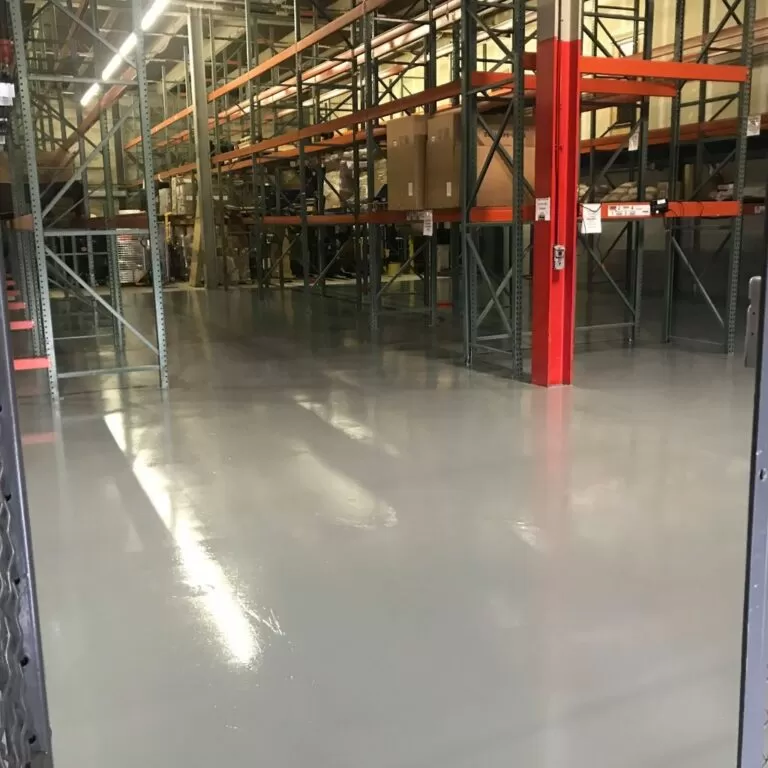
Why Warehouse Resin Flooring?
Investing in an industrial warehouse floor coating is about maximizing operational efficiency, ensuring long-term safety, and protecting your facility’s bottom line. Standard concrete coatings fail under industrial pressure—our heavy-duty resinous systems thrive.
* Long-Term Cost Efficiency: While low-grade coatings require frequent reapplication, our industrial-grade resin systems drastically reduce maintenance downtime and eliminate the need for recurring repairs, delivering an unmatched return on your investment.
* High-Performance Durability: Engineered to endure decades of constant heavy forklift traffic, severe impact, and chemical exposure, an HPS floor provides a seamless, high-strength barrier that outlasts standard flooring solutions.
* Accelerated Maintenance & Sanitation: The completely seamless, non-porous finish prevents dirt, oil, and chemicals from penetrating the substrate. This slashes daily cleaning times and ensures your facility easily meets rigorous industrial safety and cleanliness standards.
* 38+ Years of Proven Industrial Expertise: We are dedicated exclusively to the commercial and industrial sectors—bringing heavy-duty equipment, specialized technical knowledge, and proven field experience to every square foot. No residential shortcuts, just uncompromised industrial quality.

WAREHOUSE EPOXY FLOORING COST & ROI
When evaluating the cost of an industrial warehouse floor coating, it is essential to look beyond the initial price per square foot and consider the total lifetime value. How should you evaluate the long-term cost of an industrial warehouse floor coating? A low-grade coating that fails under forklift traffic costs far more in operational downtime and recurring repairs than a heavy-duty, professionally installed system.
Commercial and industrial epoxy flooring installations typically range from $3.00 to $12.00+ per square foot. Because we work exclusively in the commercial and industrial sectors (no residential projects), our pricing reflects heavy-duty materials, industrial-scale equipment, and high-performance longevity.
CRITICAL FACTORS THAT INFLUENCE YOUR PROJECT ESTIMATE
* Substrate Condition & Preparation: Total cost is heavily influenced by the amount of diamond grinding, shot-blasting, or patching required.
* Total Square Footage: Larger commercial footprints benefit significantly from economies of scale.
* System Thickness & Performance Layers: High-build, multi-layer systems designed for extreme forklift impact or severe chemical containment require more material and specialized labor.
Frequently Asked Questions About Warehouse Resin Flooring
What is warehouse resin flooring and what are its benefits?
Warehouse resin flooring is an industrial system using materials like epoxy to create a high-strength, durable surface. It is designed to handle heavy loads, frequent cleaning, and high-volume forklift traffic while remaining cost-effective due to its low maintenance requirements.
Can these floors withstand heavy forklift and pallet traffic?
Yes. These systems are specifically engineered for tough environments. HPS Floors uses high-solids coatings that resist tire marking, impact crushing from pallets, and abrasion from steel wheels.
How long does a resin floor system typically last?
The lifespan generally ranges from 8 to 20 years. This duration depends on several factors, including the volume of forklift traffic, chemical exposure, and your cleaning schedule. Systems with a urethane topcoat and proper maintenance can often exceed the 20-year mark.
What factors influence the cost of warehouse epoxy flooring?
The cost is primarily determined by:
Total Area: Larger footprints typically reduce the price per square foot.
Slab Condition: Existing floors in good condition lower costs, while those requiring extensive patching or leveling will increase the price.
Preparation Needs: The level of “aggressive profiling” required to ensure the resin bonds correctly to the concrete.
What is the HPS installation process for warehouse floors?
To ensure durability, HPS Floors follows a rigorous multi-step process:
Profiling: Aggressive mechanical profiling of the concrete slab.
Patching: Using high-compressive strength materials to repair cracks or uneven areas.
Base Coat: Applying a heavy coat of high-solids epoxy.
Topcoat: Adding an aliphatic urethane layer to maximize scratch resistance and maintain the floor’s sheen.
Who installs resin flooring for warehouses in New Jersey?
HPS Flooring has installed warehouse resin flooring across New Jersey for close to four decades, building systems tough enough for constant forklift traffic, heavy racking loads, and the day-to-day wear that distribution centers put on a concrete slab.
What makes a resin floor forklift resistant throughout New Jersey?
Thickness and proper bonding to the slab let a floor absorb the impact of steel forklift wheels without chipping. HPS Flooring builds warehouse resin flooring in New Jersey with reinforced layers specifically so constant forklift traffic does not wear through the surface prematurely.
What causes cracking in warehouse resin floors after just a year or two in New Jersey?
Skipped moisture testing or inadequate slab prep before coating are the most common causes. HPS Flooring avoids those shortcuts, testing thoroughly before installing warehouse resin flooring in New Jersey so early cracking, a frequent complaint with rushed installs, does not happen.
Where should a distribution center owner turn if their current floor stains easily from spills here in New Jersey?
A chemical-resistant resin topcoat prevents most common warehouse spills from staining or etching the surface. HPS Flooring resurfaces stain-prone slabs with warehouse resin flooring across New Jersey, giving distribution centers a floor that wipes clean instead of absorbing every spill.